Frequently Asked Questions
1. What is a Pass Box in a cleanroom?
A Pass Box is a specialised transfer chamber installed between two controlled areas to transfer materials, equipment, and components without requiring personnel to move between the rooms. It helps support cleanroom contamination-control procedures.
2. What are the different types of Pass Boxes?
The two commonly used types are Static Pass Boxes and Dynamic Pass Boxes. Static models transfer materials without active air circulation, while dynamic models incorporate an air-handling and filtration arrangement.
3. What is the difference between a Static Pass Box and a Dynamic Pass Box?
A Static Pass Box is generally used between adjoining areas where active air circulation inside the chamber is not required. A Dynamic Pass Box uses an active airflow and filtration system to support controlled conditions inside the transfer chamber.
4. What is the main purpose of a Pass Box?
The primary purpose of a Pass Box is to provide a dedicated material-transfer point between cleanroom areas. It helps reduce unnecessary personnel movement and supports contamination-control practices.
5. Which material is commonly used for Pass Box construction?
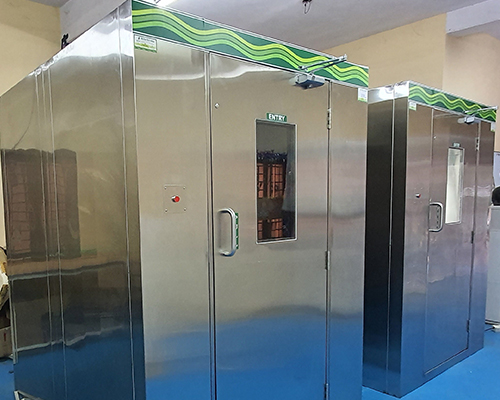
Stainless steel is commonly used for Pass Box construction because suitable grades and finishes can support cleaning and hygiene requirements. The appropriate material depends on the intended application and cleaning chemicals.
6. What is a HEPA filter Pass Box?
A HEPA filter Pass Box is a configuration that incorporates high-efficiency particulate air filtration. It is generally associated with dynamic designs where filtered airflow is required within the transfer chamber.
7. How does a Pass Box door interlocking system work?
A door interlocking system prevents both doors from opening simultaneously. When one door is opened, the opposite door remains locked until the first door is closed, subject to the selected interlocking arrangement.
8. Where are Pass Boxes commonly installed?
Pass Boxes are commonly installed between cleanrooms, airlocks, production rooms, laboratories, material preparation areas, and other controlled environments where materials need to be transferred.
9. Are Pass Boxes suitable for pharmaceutical industries?
Yes. Pass Boxes are widely used in pharmaceutical facilities to support controlled movement of raw materials, packaging materials, instruments, and other production-related items between designated areas.
10. What are the applications of Static Pass Boxes?
Static Pass Boxes are suitable for transferring materials between adjoining cleanroom areas where active air filtration inside the chamber is not required. They are commonly used in laboratories, pharmaceutical facilities, and controlled production environments.
11. What are the applications of Dynamic Pass Boxes?
Dynamic Pass Boxes are used in applications requiring active airflow and filtration within the transfer chamber. They may be suitable for pharmaceutical production, biotechnology facilities, and specialised cleanroom environments, depending on the system design.
12. Can Pass Boxes be customised according to project requirements?
Yes. Pass Box dimensions, construction materials, door arrangements, interlocking mechanisms, and additional features can be specified according to project requirements and design feasibility.